Colours, like features, follow the changes of the emotions – Pablo Picasso
In winter I wear black and get my coffee from the same grumpy barista. Always. Recently, I went to order the same old latte but instead of the usual grunt, grumpy barista cracked half a smile and while I was waiting for my coffee, an elderly lady asked me the time and we started chatting. Her name was Helen and she said she’d seen me many times waiting for coffee. I asked her why she had never spoken to me before. She replied that she thought I always looked unfriendly or busy and that I’d be dismissive of her.
Helen’s comments surprised me. How could a stranger’s opinion be so different to how I see myself? It struck me then that the only difference between my usual coffee run and that morning, was that I’d been wearing a pale yellow sweater and floral skirt instead of the usual black.
The colours we chose to wear influence our interactions with the people around us. By wearing yellow, I’d altered the way that grumpy barista and Helen had interacted with me because they perceived me differently from when I was dressed in black. I’m a friendly person and I’d never considered that by wearing black, I’d be considered unfriendly or aloof.
The colours we wear are influenced by habit, age, utility, cultural influences, experiences and trends. I wear black because I’ve always (mindlessly) purchased dark clothing for the cold months and black epitomises Melbourne style. But black doesn’t reflect my personality and I feel less joyful when I wear it.
To dress in colours that affect the way we feel about ourselves, as well as how others interact with us, gives the term smartly dressed new meaning.
So next time you reach for that black dress or pale pink shirt, consider the psychology of colour; and if you see me in the coffee shop, please say hello!
Here’s a brief guide to colour, based on my own sketchy research;
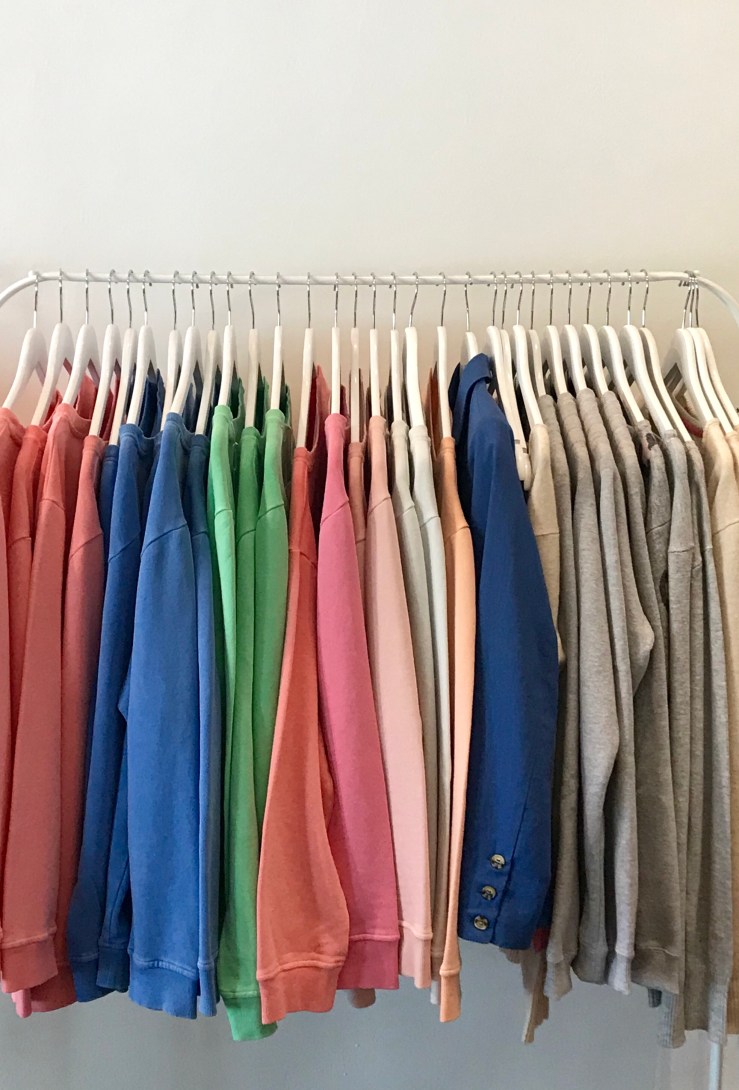
When it comes to clothing, black is the most preferred colour overall amongst adults. Black is associated with power and sophistication but also with intimidation and unapproachability.
At the other end of the spectrum, white clothes radiate a youthful, modern freshness.
Pink is warm and romantic and red is powerful, energising and attention attracting.
Blue is the most variable mood influencer depending on the shade. Navy portrays the wearer as chic but conservative, royal blue is traditional, honest and relatable and pale blue is calming, dreamy and creative.
Yellow radiates warmth and light-heartedness although head-to-tie yellow will give those around you visual fatigue and probably a future aversion to Big Bird.
And green is a natural colour that puts people at ease, it is calming and grounding to the people around you.

 Georgina Clark