Chatting with Rikki Dank, founder of Lajarri an Indigenous Australian art gallery in Dubai, junior Nimaryngki and her David and Goliath battle to end fracking on her Country.
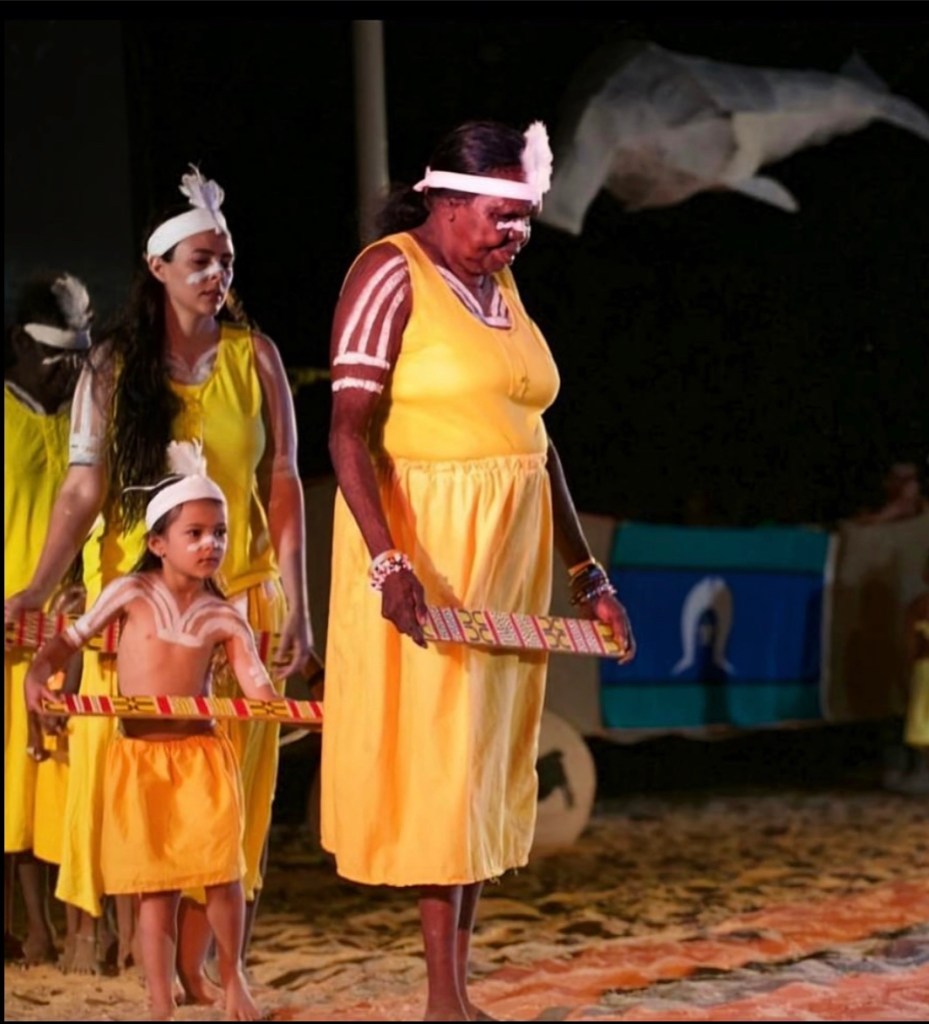
G: Tell me about this photo.
R: We are Gudanji/Wakaja people from the Barkly Tableland in the Northern Territory of Australia. Our land is Mermaid Country or Womens Country and my grandmother is our senior Nimaryngki (boss). She also looks after traditional dancing and medicines for our family. That’s why she’s dancing up the front. There’s not many of our clan left. A lot of our people were murdered or shot. I remember once feeling bullets in my great grandmothers back and not knowing what it was. We don’t carry the anger, it’s still grief.
G: What brought you to Dubai?
R: I came to the Middle East to get out of my comfort zone. As a woman, I felt safe in Dubai and I loved the diversity of peoples. I brought my family over for a holiday, they liked it, so we decided to move.
G: Can you tell me about the art scene in Dubai?
R: Diverse but thriving. There’s a hunger here to develop and nurture the arts. Dubai is easily accessible to the world, some of the biggest international art fairs in the region are here which benefits established artists and collectors looking for emerging or new talent.
G: How is Australian Indigenous art perceived in the Middle East?
R: Speaking generally, it isn’t well known but that’s changing as the market matures. When I explain the symbolism behind the art and that the stories are thousands of years old, people’s eyes light up, there’s a connection, it’s exciting to see that.
G: Professionally, what are you are you proud of?
R: Lajarri was the first Indigenous Australian gallery to exhibit at World Art Dubai. I bought our art to the Middle East.
G: You have a degree in nursing but you went on to open an art gallery. Why?
R: I did a course when I was 14 which taught me the basics of running a gallery. I had this dream but never thought it would be possible, I thought I should do something sensible so I studied nursing. When we moved to Dubai I saw an opportunity, there was no one else showing Indigenous art.
G: Which Indigenous artist do you admire?
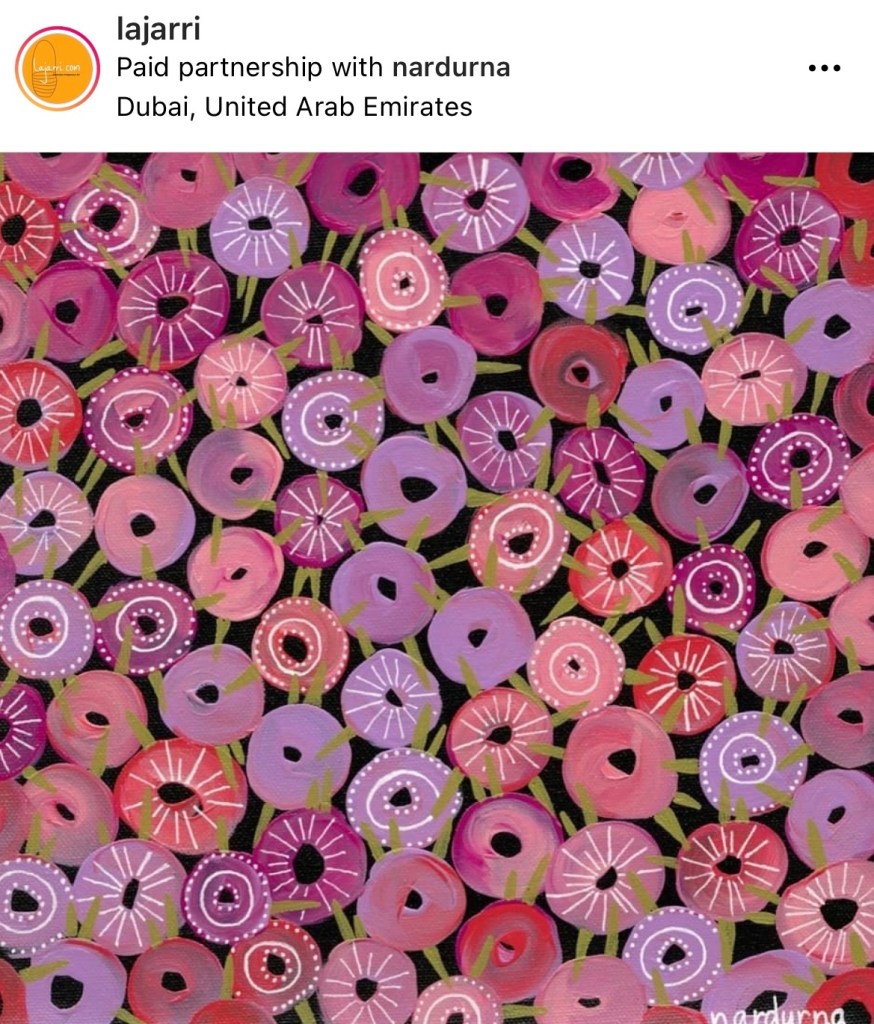
R: Nardurna, my sister. The quality of her artwork; she takes time selecting colours and working out placement, it’s all calculated in her head but it appears effortless. To see her succeed as an artist and business owner is lovely. She has it all together because she works so hard.
G: Did you ever want to be an artist?
R: In high school I won prizes for my paintings and I exhibited in a regional gallery. I still paint but I don’t, at the moment, feel that I’m good enough. I have an artists block which I suppose is what a lot of artists struggle with sometimes. I do dabble but not seriously because I dedicate my time to the gallery and other projects. Maybe down the track I will start up as an artist again…
G: You attended the United Nations Climate Change Conference Summit recently. Why?
R: I went to raise international awareness around what’s happening on our land.
G: What’s happening on your land?
R: One of the largest gas fields in the world is being built on our land without our consent. And down the road is a lead and zinc mine.
G: Why is this important?
R: Fracking and mining poisons the environment; our water has high levels of zinc, fish are dying and people are getting sick. My family have lived there for over 65,000 years. Once our country, our song lines and sacred sites are gone, well that’s it, it’s gone for good, you can’t get that back.
G: How do you see this playing out?
R: I’m hopeful but I try to stay in the present moment and focus on one thing at a time. Native Title law is really complex, in essence the new laws will allow oil and gas companies to come on to our land and frack and Traditional Owners will be cut out so we won’t be able to object. It’s going to be a big long fight to get these laws changed.
G: What do you do in your spare time?
R: (Laughs) I’ve got an 11-year-old daughter and normally my husband and I are so tired that we watch Korean dramas on Netflix. My two dogs seem to enjoy this too!
G: What do you miss about Australia?
R: Family, going out bush and the laid back beaches. I also miss the sausages, rotisserie chicken and pasta salad from Woolies!
G: What don’t you miss?
R: When you’re a person of colour in Australia, you always feel like you’ve got to look over your shoulder and keep your guard up. We even get followed by security when we enter some stores. I don’t have to do that in Dubai.
G: What three things would you love in the future?
R: My daughter to speak fluent Arabic. A big gallery near Alserkal Avenue (Arts District) to represent Australian Indigenous art. And to go home without seeing my grandmothers upset about issues on their land.

 Georgina Clark