
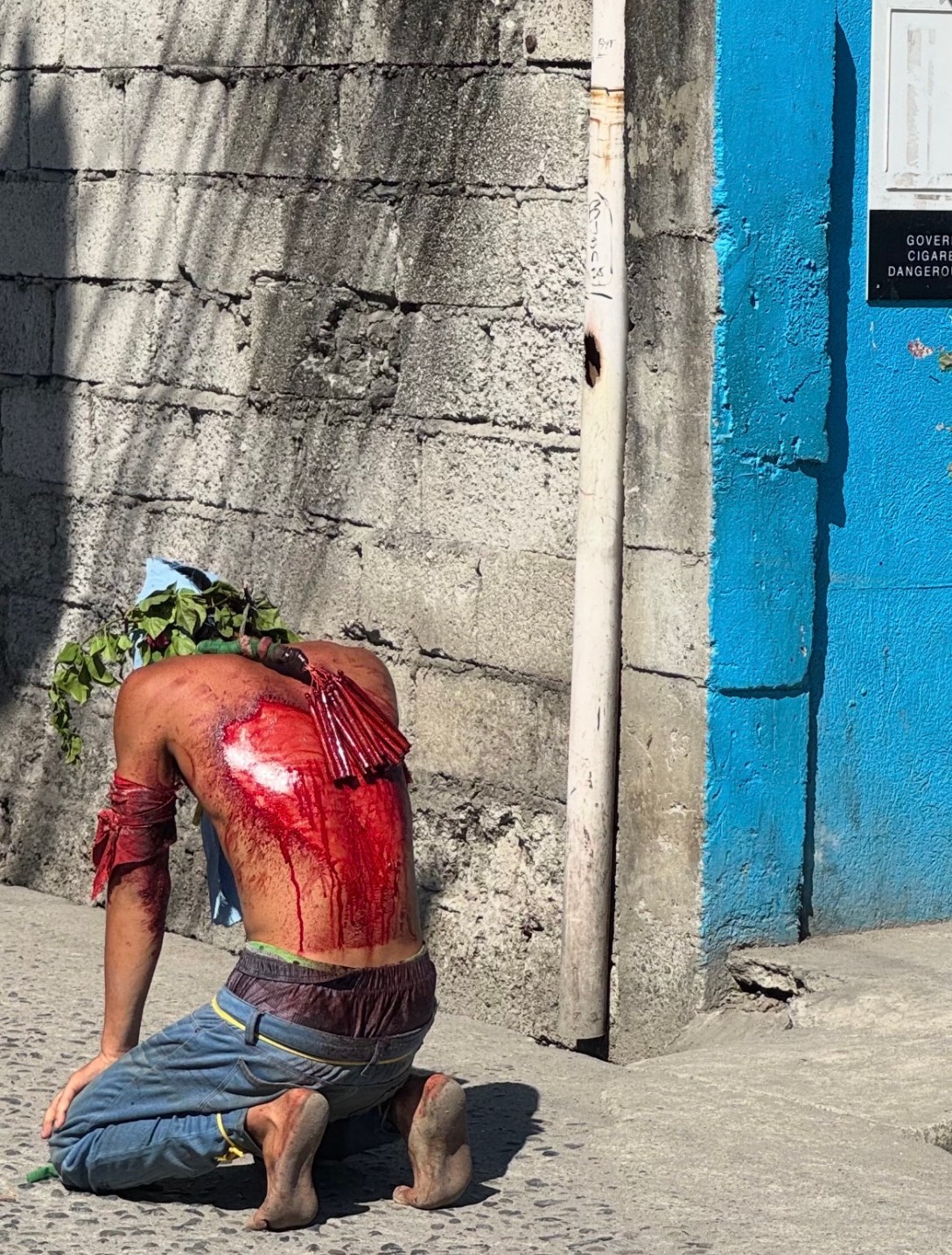
It’s Good Friday. I’m with the only English-speaking tour group in a small village outside Manila, standing in the middle of what feels like a fever dream. There’s blood everywhere. I’m acutely aware of myself: foreigner, fair-skinned, faithless and I’m already wondering why I’m here.
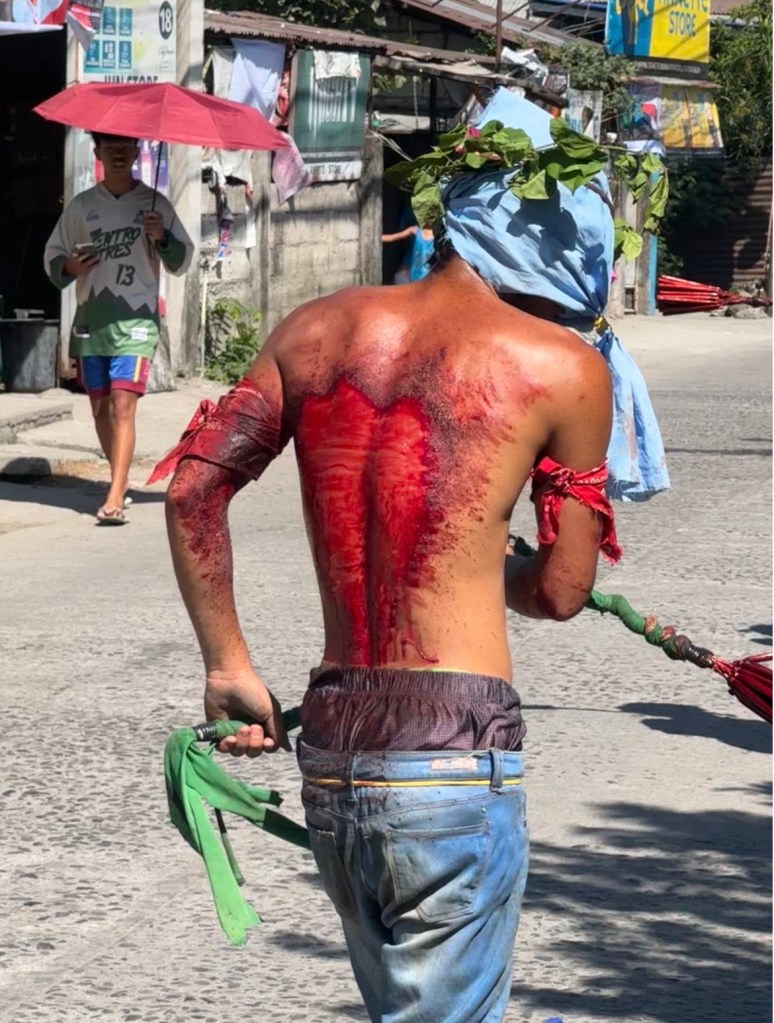
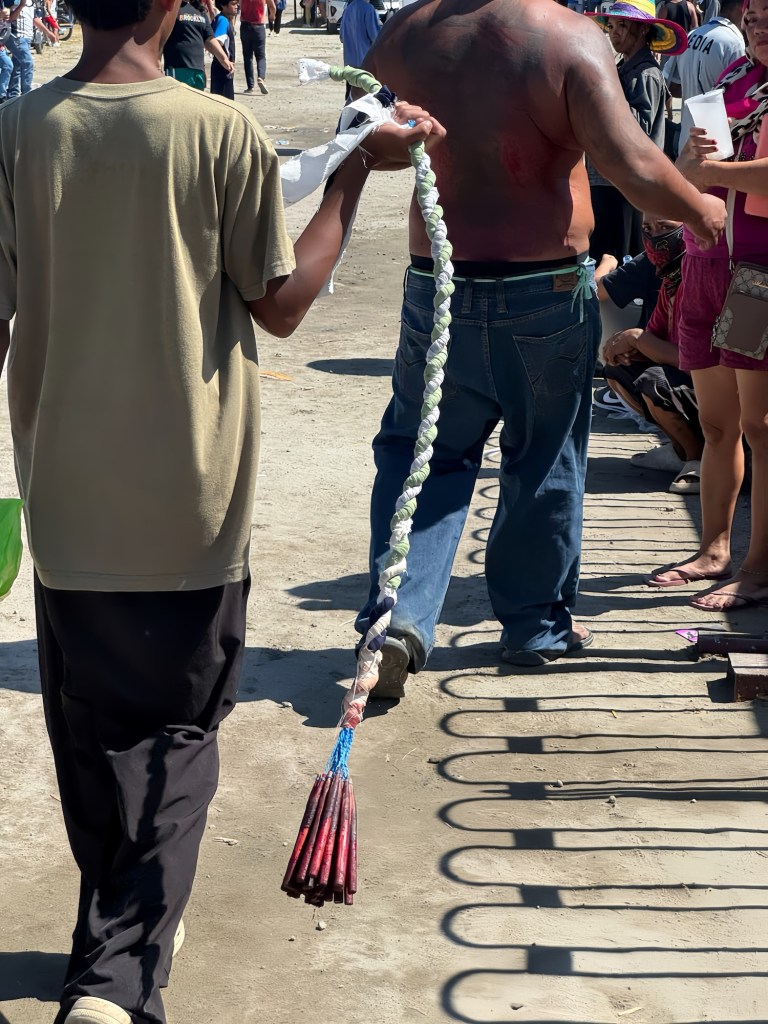
The Cutud Lenten Rites is a Catholic ritual, an extreme Passion Play, ongoing since 1955. The faithful walk barefoot through a village, whipping themselves, stopping to lie face down in the dust while a companion casually lashes them.
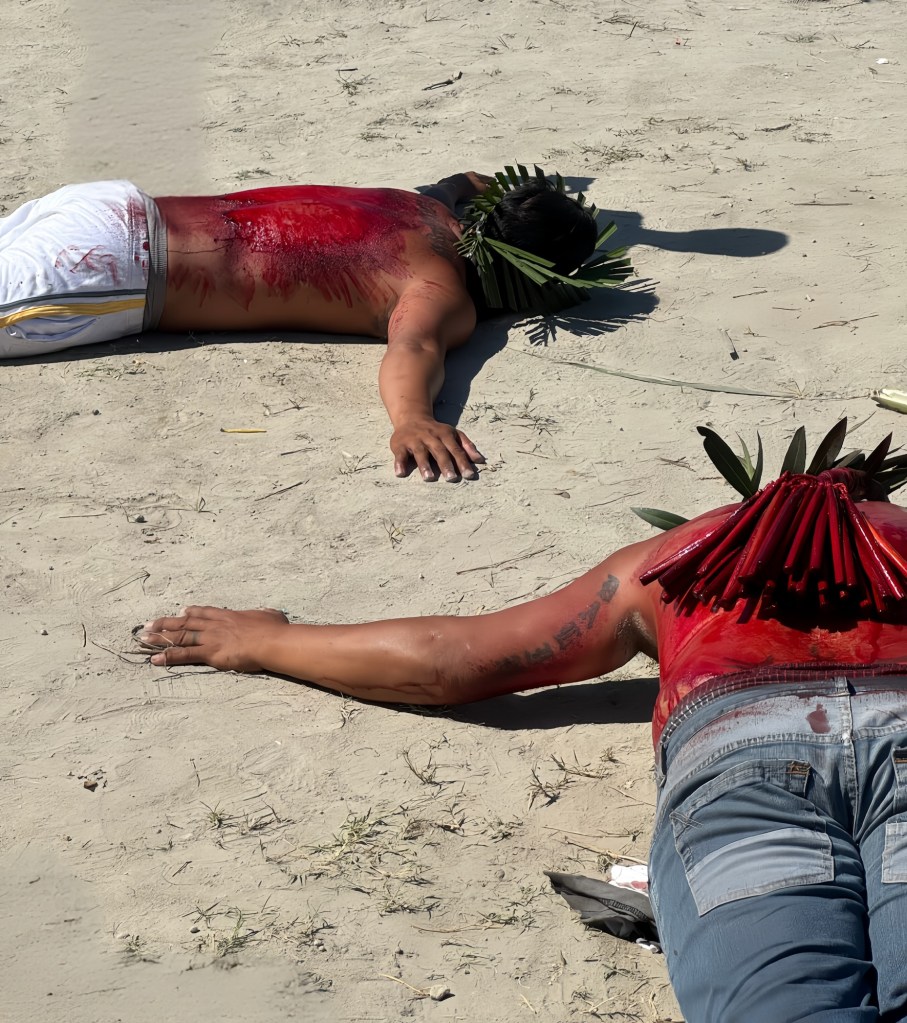
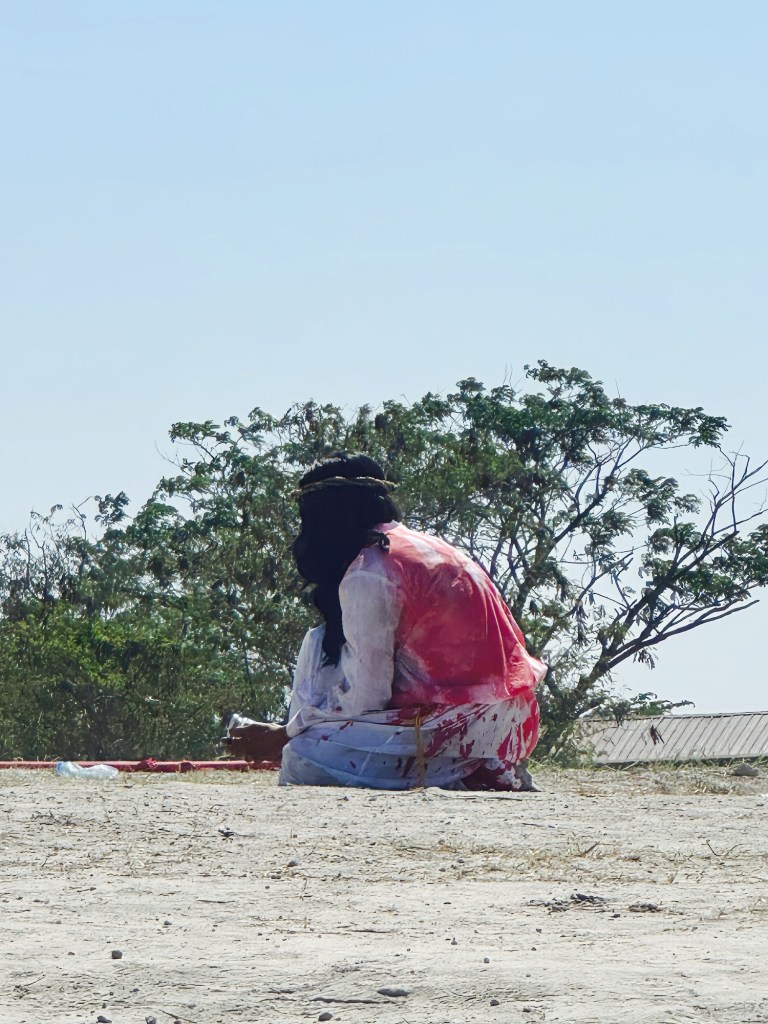
Others drag heavy wooden crosses. Faces are obscured beneath hoods, heads crowned with palm leaves and flowers. They move slowly along the main road from a church to a mound where three crosses stand, kneeling, prostrating, whipping, partaking in the suffering of Jesus.
And yet the mood along the route isn’t solemn so much as carnival-adjacent. Street vendors sell Pringles and SpongeBob balloons. Children scream with delight and insist on high-fiving the few foreigners, as if this were a parade rather than an act of penance.
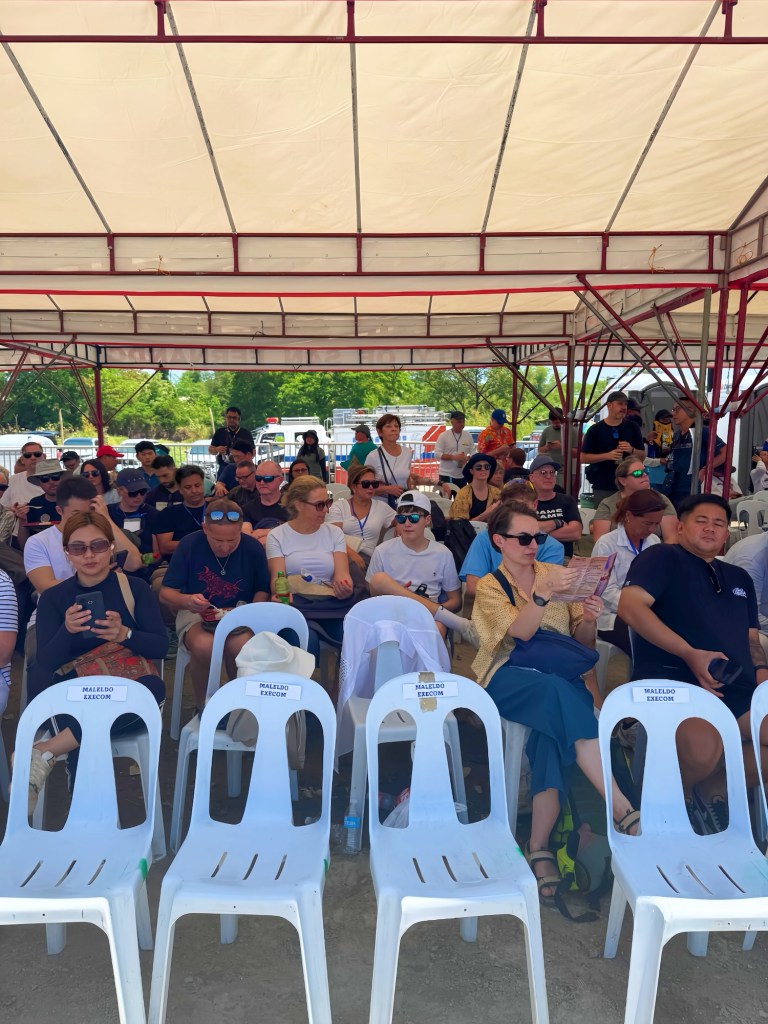
Back at the mound, we regroup under a marquee, VIP, apparently which feels a tad obscene given villagers stand opposite us in the full, punishing sun. We sit on plastic chairs, our water bottles cooling in an esky, while prayers and hymns blare through loudspeakers, filling the chaos with a relentless intensity.
Around midday, the Passion Play begins: a re-enactment of Christ’s final hours. Actors dressed as soldiers jeer and strike, the figure of Jesus is put on the cross, the mourning women sound perhaps too convincing.
And then, almost seamlessly, the line between theatre and reality dissolves. The crucifixions that follow are no longer symbolic. Men volunteer to be nailed to the crosses.
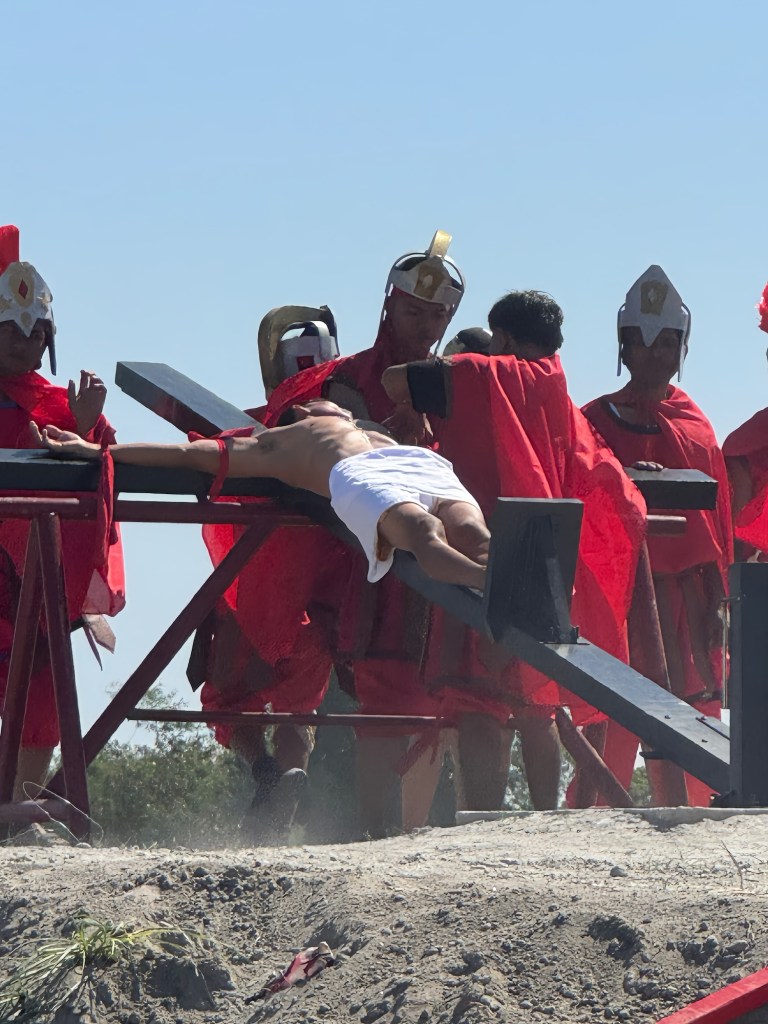
At first, I feel shock, the blood, the violence, the intimacy of pain, the uneasy awareness of my own role in witnessing it. There’s no alcohol, no softening of the edges. It’s brutal. But later, something shifts. A creeping acclimatisation that feels morally suspect. I’m sweaty and blood-speckled watching a man on his knees be whipped, then nailed to a cross while I eat a bag of cashews like I’m at the cinema.
I’ve never felt further from home, wherever that is, or more aware of myself as an outsider. I catch the eye of a man holding a bloody bamboo whip, I don’t know whether to look away or acknowledge him, as though we’re participating in the same thing. Our tour leader asks if I want to buy a whip, do I? Maybe but it seems both impractical and inconvenient to carry the bloody thing back on the bus.
By the end of the day, the question isn’t what I witnessed but why I needed to. The answer could be curiosity or cultural interest or something much darker, neither option feels especially flattering but a far more compelling alternative to chocolate eggs.

 Georgina Clark