This is a beautiful studio space, how did you come to be here?
In 2021 during the pandemic, we encountered production problems between the design and workshop teams which were in separate locations. I had three criteria for a new space to house everyone, it had to be somewhere near to where I lived, nice enough for visitors and also affordable.
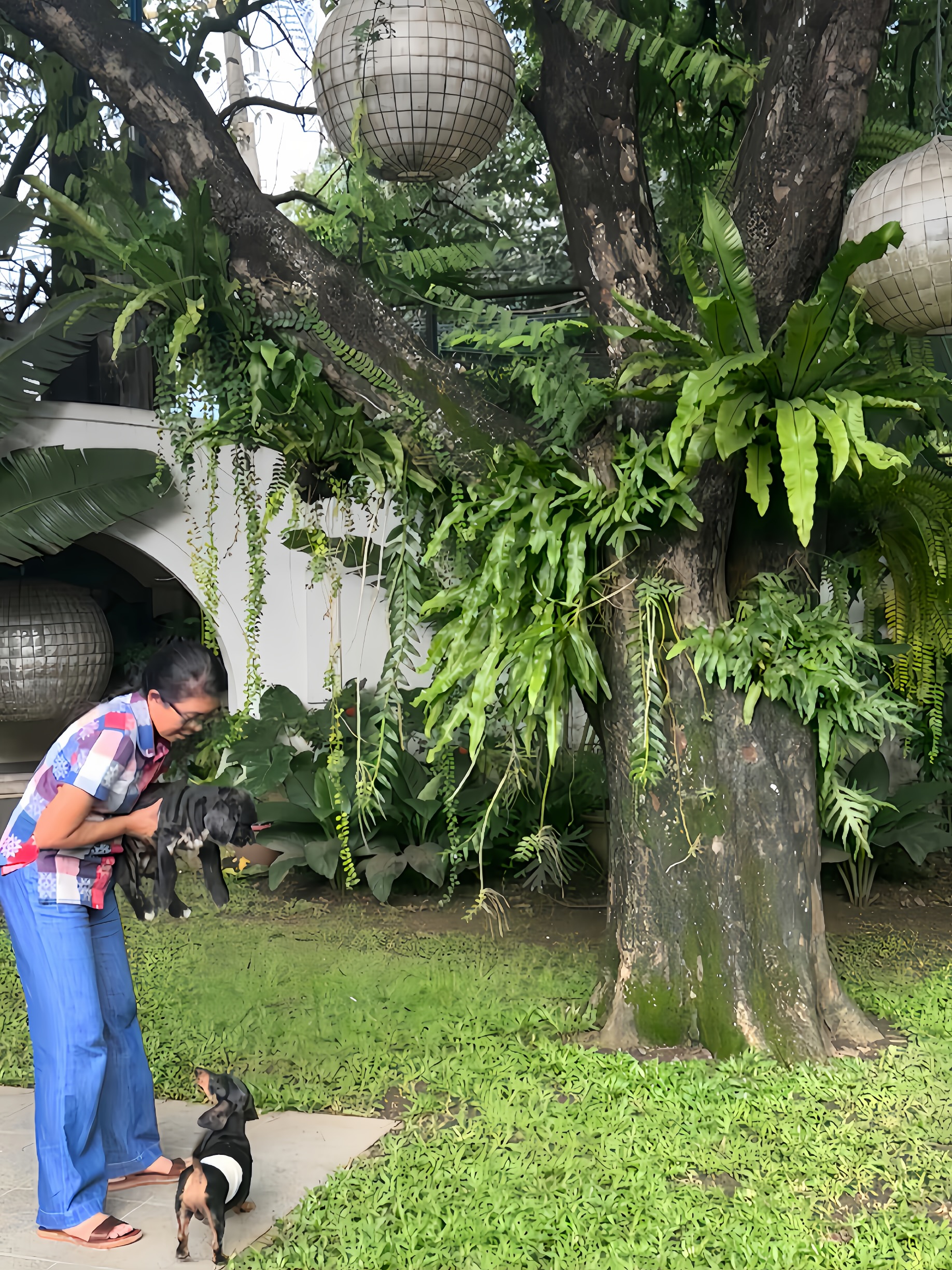
This used to be a pre-school. I had noticed it before and when I saw the rental sign outside, I had a look, it perfectly met all my criteria and it was L-shaped!
Can you describe Filip + Inna in 3 words?
Culture, Relationships and Hands. And Filipino Soft Power; when something innate to a country (like culture) becomes very appealing to other people.
Filipinos are recognised for their love of singing. If Filip + Inna were a song, what would it sound like?
Happy, lots of melody, the full spectrum of Filipino instruments. If I had to describe the composition of our song, it would be the sounds of the stories that go on behind the scenes.
How did the brand come into being?
I was diagnosed with cancer in 2000 and when you are dealt the cancer card, you have a fresh perspective,
“What if this goes down and I only have 6 months… I have to do something with a purpose beyond myself.”
I had taken up a Bachelor of Science in Clothing Technology and I knew I wanted to do fashion but I was disillusioned with the process of commercial fashion. The answer came in 2007 when I met textile designer John Robshaw in New York. In his studio was a book, he would circle villages around Asia and write the particular skill they had. That was a eureka moment for me, I realised I wanted to work with local artisans. I started the brand in 2008/2009.
Favourite piece you’ve created and why?
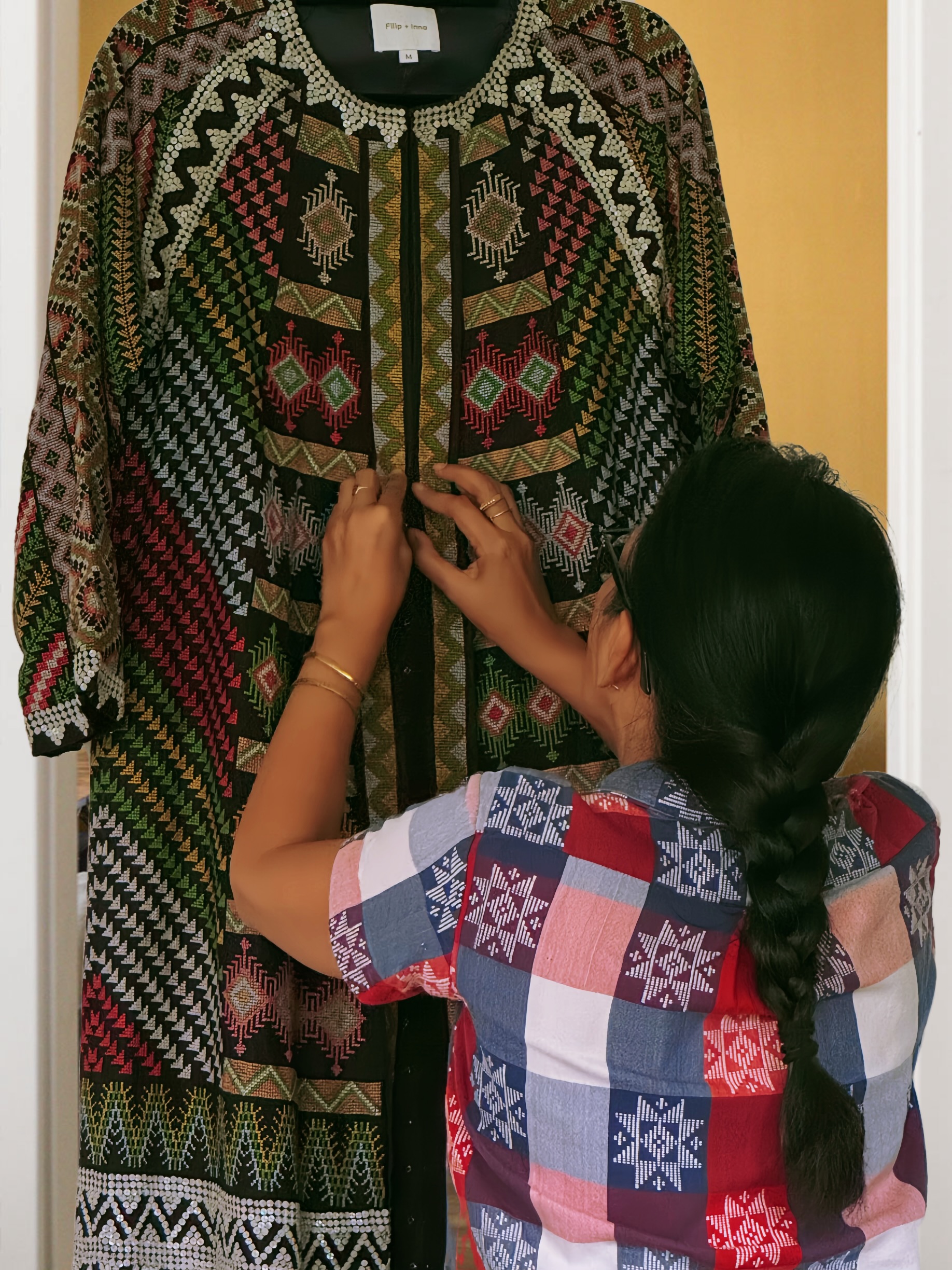
I have an emotional attachment to a coat by Carmen Kwatik. She passed away while she was working on it. I had become very close to her and her whole family. After she died, they sent me the unfinished coat. I couldn’t do anything, it still had her smell, the threads and the needle… After two years I felt a better way to honour her was not to just leave it in my closet but to have it finished by her daughters. People tell me I should sell it but it’s one piece that is really so special to me.
You work with artisans right around the Philippines. Which indigenous community taught you something that changed the way you design?
Each group teaches you something and we adjust to how each group wants to create. When you meet indigenous artists in person and see their art, you can’t help but honour their creativity and be led by them rather than impose your designs upon them.
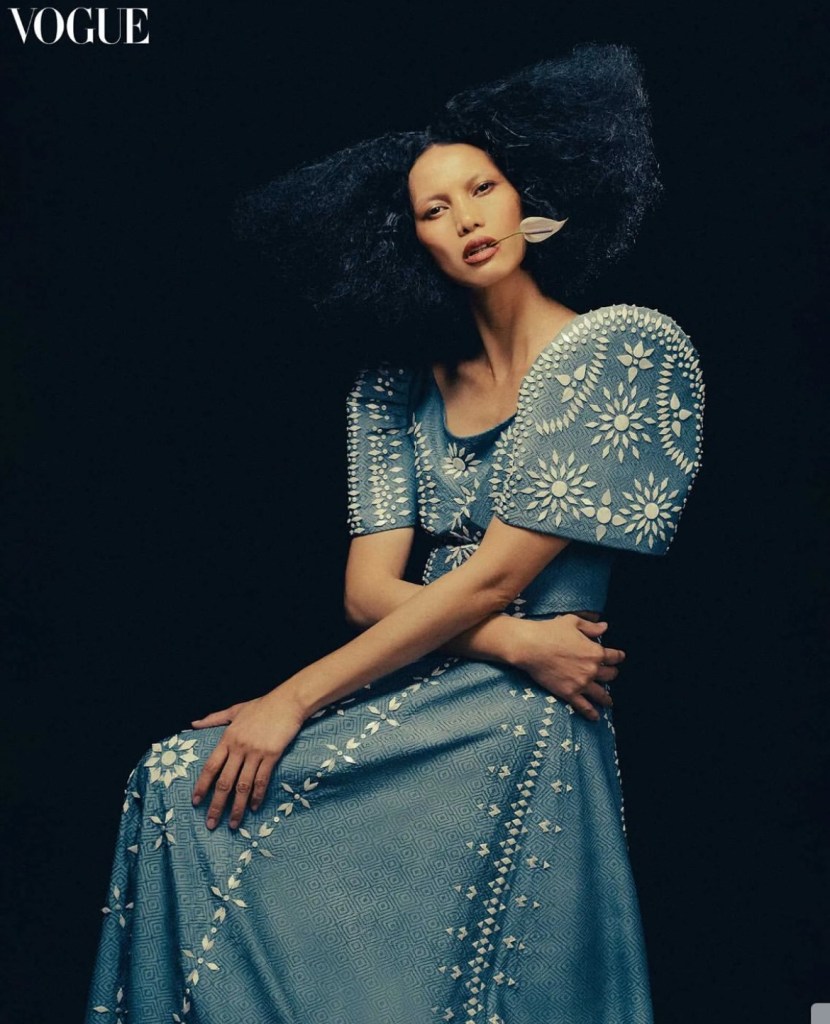
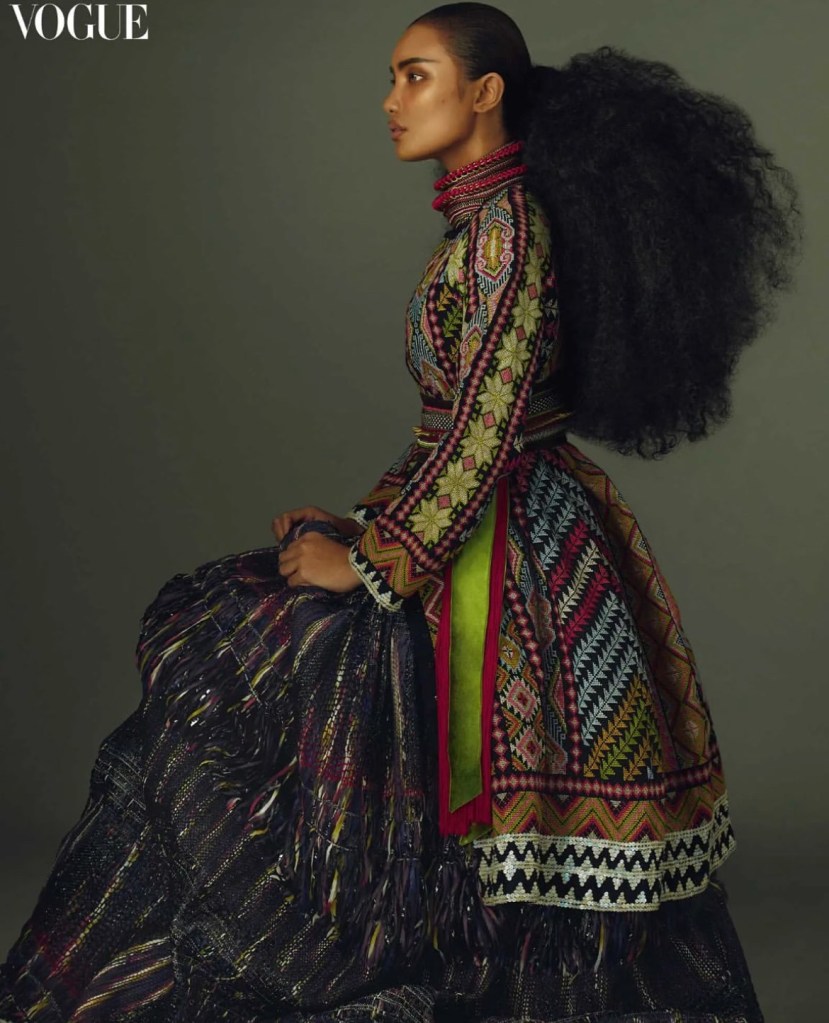
The indigenous T’boli women weavers use a loom to hand weave intricate stories on to textiles, traditional craftsmanship passed from mother to daughter. Can you tell me something you personally discovered about these National Living Treasures?
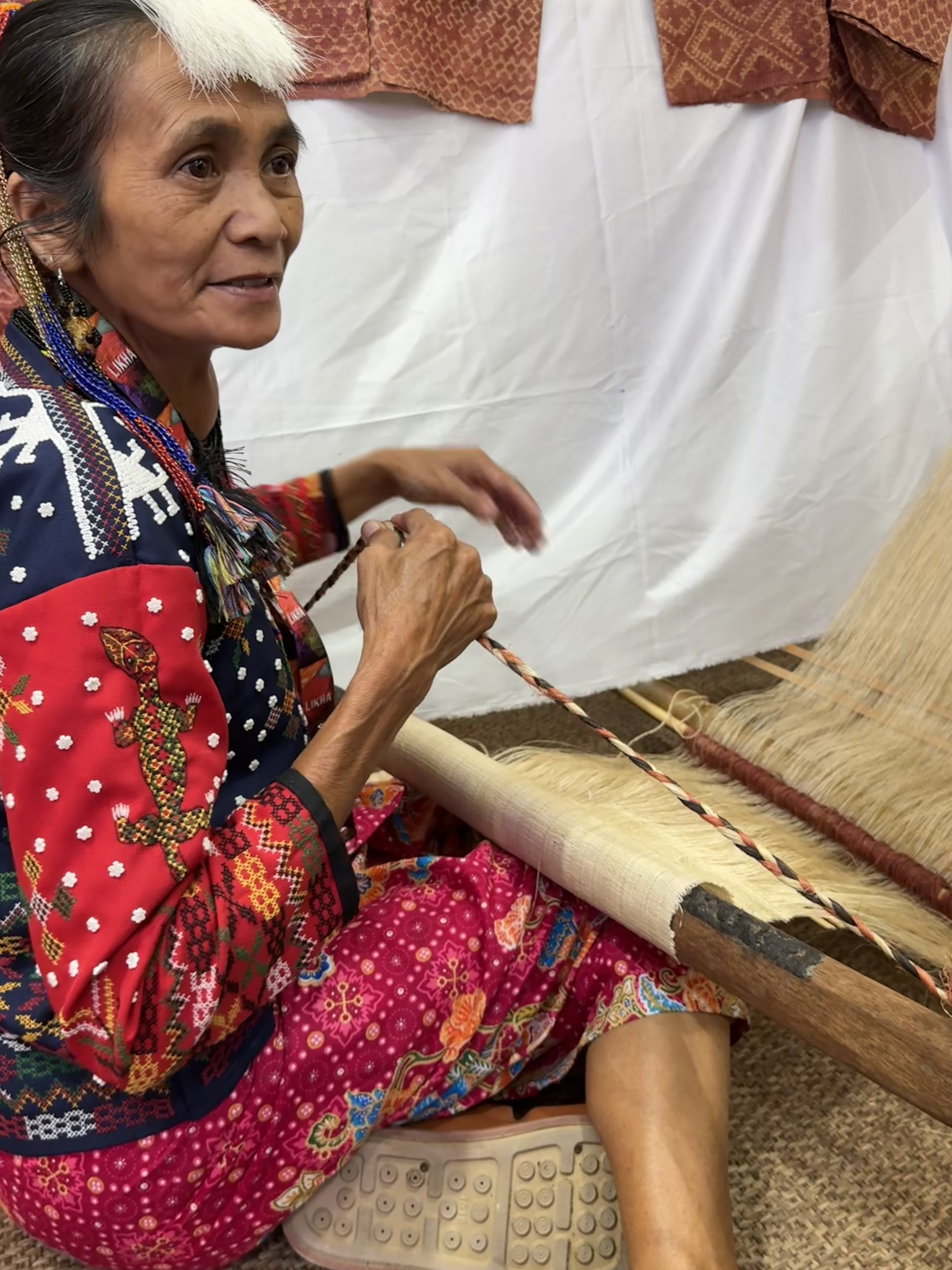
Firstly, their intelligence and creativity are astounding, when you see their patterns, it is so intricate, how what they see in their heads goes into a fabric… I so admire them.
I discovered that they love lipstick. Even though weaving is solitary work, like a meditation and they are already beautiful, they appreciate visual beauty and take pride in themselves, in their femininity. It is a very endearing quality. I bring lipsticks each time I visit.
Also, they are so affectionate. When I visit, sometimes they cry, I cry.
How do you balance working with artisans who work at their own pace and being commercial?
We adjust to their schedule, we tell our story, we stick to who we are as a brand and people respect that.
Which designers do you admire?
I had the opportunity to work with Inno Sotto and Jojie Lloren. Also, Ivarluski Aseron, Joey Samson and young designers like CJ Cruz, Gabbie Sarenas, Kelvin Morales, Renz Reyes, Steph Bagasao, Yssa Inumerable, Abdul Gaffar.
Whose style do you admire?
Talitha Getty’s bohemian style, Jackie Onassis in her A-line dresses, the androgyny of Christie Turlington.
Who inspires you creatively?
People I meet. And the artisans.
Who would you love to collaborate with outside of fashion?
Ceramic artist Edmund de Waal. I loved his book The Hare with Amber Eyes. His medium is porcelain, his finishing, the shapes, the muted colours, so beautiful.
If you were not designing, where would we find you?
Teaching pre-school kids.
What’s one thing people would be surprised to know about you?
I don’t appear sporty but I am. They say I have a good golf swing, it’s easy for me to get on a windsurf board, I like tennis.
What’s on your current playlist?
Cinema Paradiso for designing. Abba when I’m happy. Worship songs when I need to be hopeful. Depends on my mood.
Favourite city?
Tokyo. Everything makes sense. The Japanese are friendly but restrained. They take so much pride in their work, whether it’s the person driving the taxi or the way something is wrapped also how they preserve things, honouring imperfections and the work of the hands, craft there is still so much alive, I love everything about it. It nurtures my minimalist side.
What do you love about Manila?
The craziness of it, the people. I can confidently drive my car around and if I break down, someone will help me.
What’s your guilty pleasure?
TV series. I just finished Hostage.
What advice would you give to emerging Filipino fashion designers?
Start small. Focus on what’s on your plate. Don’t make comparisons with your peers, we all have different journeys.
What has been a challenging aspect of your work so far?
Always being careful and sensitive towards the artisans, trying not to offend, doing the right thing by them.
And a highlight?
When I started, working with artisans wasn’t a thing. There were designers working with craft in the context of high fashion but I brought it to a more accessible level. To now see, new brands rooted in culture and people realising that the value of craft is in its process, is so encouraging.
First pinch-me moment?
When I first started out, I was invited to do a trunk show in South Hampton. I had to send 35 pieces (my whole inventory at the time) and I didn’t know how to price my work. Back then, Tory Burch was the it-girl so I based my prices on her price points. I was just winging it but we sold 27 pieces. Later the organiser of the event invited me to join their trunk show in New York. I walked in jet-lagged and was introduced to a woman who was looking through my collection. She wanted to buy some pieces. I didn’t realise it was Tory Burch until later.
What do you want Filip + Inna to be remember for?
As the brand that worked with artisans in a way that really manifested in the pieces we created. I want us to be remembered us as a brand that honoured Filipino craftsmanship.
What’s one thing you still want to try – inside or outside of fashion?
I always wanted to design homes, so architecture.


 Georgina Clark